
Why asking for more isn't a strategy: five things our new research tells us about the future of member income

The membership sector has a problem it's been politely not naming. More members are leaving. Fewer people are donating. And subscription fees now cover only half the average membership organisation's operational costs.
Something has to give - and our new research, drawn from a nationally representative sample of 3,000 UK adults, suggests the organisations that survive will be those willing to fundamentally rethink where their income comes from, and who they're asking.
Here are the five headlines:
1. The fundraising model most organisations rely on is already broken
The traditional playbook - asking your most loyal, longest-standing members to give a bit more each year - isn't a growth strategy. It's damage limitation dressed up as one.
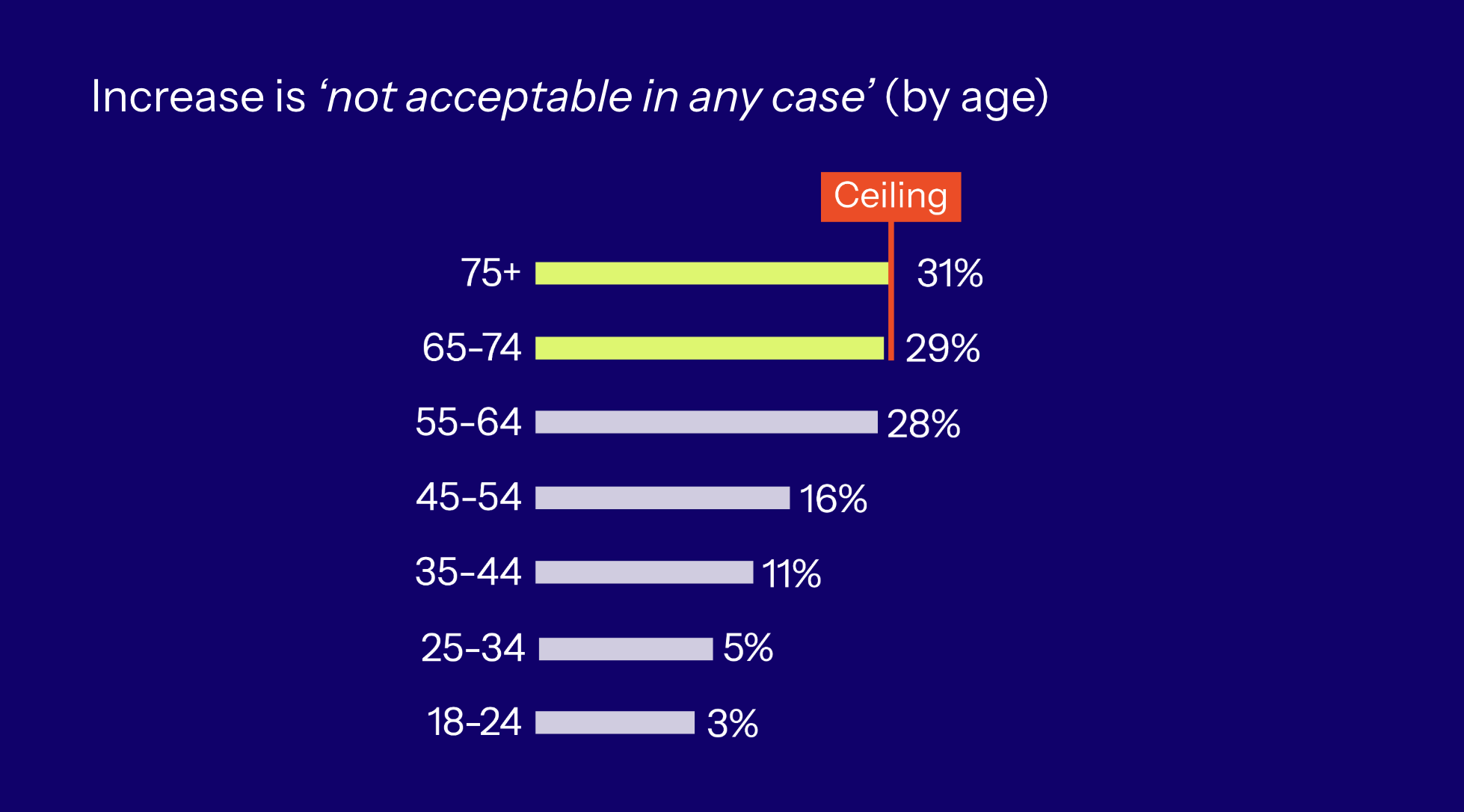
On the surface, our data looks reassuring: 77% of UK adults donated to a charity or non-profit in the last 12 months. Great. But look closer and a harder truth emerges. Donation rates are heavily concentrated in older age groups, with (Baby) Boomers leading the way. And when we asked what would happen if a charity increased its suggested donation amount, the response was instructive: intolerance toward any increase is highest precisely among that older cohort. Among 75+, nearly a third said an increase would be unacceptable under any circumstances. Among 25–34s, that figure is just 3%.
The people the sector has been depending on most have, quietly and reasonably, started to say no. The ceiling is real, and it's visible in the data.


2. You already have a much bigger donor pool than you're using
Here's something genuinely encouraging buried in the same research. Of those who engaged with a charity or non-profit in the last 12 months without donating, the figure stands at 69%. Nearly seven in ten people who are already connected to this world - buying products, following on social, signing petitions, volunteering their time - haven't yet been converted into any kind of giving relationship.
That's not a failure of intent on their part, it's more a failure of mechanism on ours.
The most effective conversion opportunity emerging from the data? Micro-donations - small, spontaneous acts of giving (typically under £1) triggered by a moment rather than a commitment. Checkout prompts, online purchase round-ups, in-experience moments at events or venues: together these generate nearly 60% combined likelihood to give.
More good news: these aren't radical new channels. They're familiar moments and activities already provided by membership organisations, waiting to be redesigned to better fit the opportunities.


3. Millennials aren't disengaged - they're just being misunderstood
This one deserves to be said clearly, because the sector has been arguably misreading it for years. Millennials have not checked out. Often maligned as ‘slacktivists’ or ‘self-absorbed’, they are actually just differently engaged, and the distinction matters enormously.
Among 25–34s, social following of charitable organisations runs at 38% - well above the total average. Event participation, buying food and drink on-site, hosting fundraisers: all significantly higher than the norm. This is an audience that is active, invested and present. They've simply never been properly asked to give in a format -or at the right moment - that resonates with them.
The evidence on micro-donations underlines the point sharply. 60% of 25–34s say they've already micro-donated. Yet only 13% of the same group donate via ongoing Direct Debit. The asymmetry is striking, and the implication is clear: the path to Millennial income runs through the experiences your organisation already owns, not through a standing order form.


4. The legacy conversation is happening at entirely the wrong moment
Conventional wisdom in the sector says legacy giving is a conversation for later life. You wait until someone reaches their sixties or seventies, and then you begin to plant the seed. Our data says this approach is off-point and the cost of getting it wrong is significant.
When we asked about likelihood to leave a gift in a will, openness peaks among younger adults and falls consistently with age. The 25–34 cohort is, counterintuitively, the most receptive legacy audience in the country. By the time organisations are having the conversation, the window is already closing.
This isn't as paradoxical as it sounds. Younger generations are constructing a sense of purpose and legacy earlier than any previous cohort. Writing a will, having children, taking on caring responsibilities for ageing parents: these moments cluster in your 30s and 40s, not your 70s, and each one forces a direct confrontation with what you want to leave behind. Older Millennials and Gen X represent the most overlooked legacy audience in the sector. The organisations that start the conversation now will be the ones who benefit, eventually, from it.

5. Diversify or decline - there is no middle ground
The final takeaway from the research is the starkest. When we asked UK adults which giving methods they'd consider in future, appetite is strong but it flows towards formats the sector has historically underinvested in. Online donations, fundraising events, shopping-based giving, in-memory donations: these are the channels where future intent outpaces past behaviour most significantly. The audience is ready and the signals are there. The question is whether organisations are.
26% of associations reported membership decreases last year, up from 21% the year before. 66% are already actively seeking to broaden income beyond core membership fees. The direction of travel is understood. What our latest research adds is the start of a blueprint for where to go next:
- 25–44s are your in-experience micro-giving audience
- Millennials and Gen X are your untapped legacy pipeline
- Online audiences are your indirect giving opportunity, right now
The organisations that will thrive aren't necessarily the largest or the best-resourced.
They're the ones willing to meet their audiences where those audiences already are and to ask them in ways they actually recognise.
Want to explore what this means for your organisation?
Our Media works with membership bodies, charities and NGOs to develop content strategies rooted in genuine audience insight.
For bespoke insights and support in developing your engagement strategy, drop us a line: clair.atkins@ourmedia.co.uk

More than just a strategic content agency
Content Marketing
We help our clients succeed through brilliantly told stories, the richest products and most effective campaigns.
Content Production
Our studios can produce content for any format, channel or medium. Always delivering the highest quality and biggest impact.
Monetisation
We create new revenue streams and commercial models for our clients rooted in our expertise of specialist content.
Consultancy
We help our clients assess new opportunities and overcome obstacles through a combination of data, insight, strategy and technology.
Advertising
Connect with our audiences that make up over 20% of the UK population in the environments that matter to them.

The exterior of our Bristol HQ